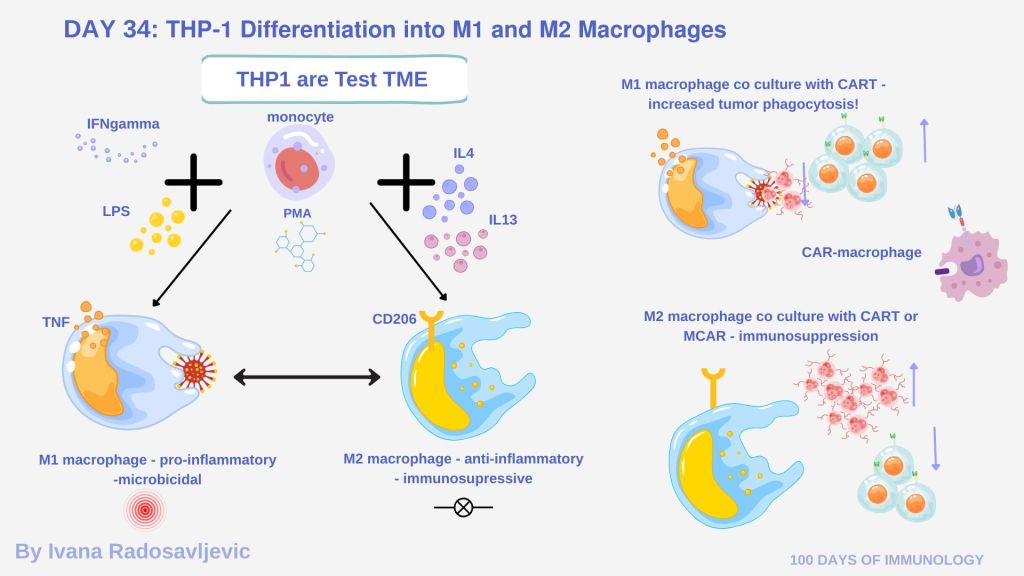
Macrophages are versatile immune cells with roles in 𝘩𝘰𝘴𝘵 𝘥𝘦𝘧𝘦𝘯𝘴𝘦, 𝘵𝘪𝘴𝘴𝘶𝘦 𝘳𝘦𝘱𝘢𝘪𝘳, 𝘢𝘯𝘥 𝘪𝘮𝘮𝘶𝘯𝘰𝘳𝘦𝘨𝘶𝘭𝘢𝘵𝘪𝘰𝘯. In vitro, 𝘛𝘏𝘗-1 𝘤𝘦𝘭𝘭𝘴 𝘱𝘳𝘰𝘷𝘪𝘥𝘦 𝘢 𝘳𝘦𝘱𝘳𝘰𝘥𝘶𝘤𝘪𝘣𝘭𝘦 𝘮𝘰𝘥𝘦𝘭 𝘧𝘰𝘳 𝘨𝘦𝘯𝘦𝘳𝘢𝘵𝘪𝘯𝘨 𝘮𝘢𝘤𝘳𝘰𝘱𝘩𝘢𝘨𝘦𝘴 via PMA treatment, followed by polarization into 𝘔1 (𝘱𝘳𝘰-𝘪𝘯𝘧𝘭𝘢𝘮𝘮𝘢𝘵𝘰𝘳𝘺) or 𝘔2 (𝘢𝘯𝘵𝘪-𝘪𝘯𝘧𝘭𝘢𝘮𝘮𝘢𝘵𝘰𝘳𝘺) phenotypes depending on cytokine cocktails [1,2].
𝗠𝟭 𝗽𝗼𝗹𝗮𝗿𝗶𝘇𝗮𝘁𝗶𝗼𝗻: IFN-γ + LPS or TNF-α; high IL-12/TNF-α production, enhanced microbicidal activity.
𝗠𝟮 𝗽𝗼𝗹𝗮𝗿𝗶𝘇𝗮𝘁𝗶𝗼𝗻: IL-4, IL-13, or IL-10; anti-inflammatory, high CD206 and arginase 1 expression [2].
These models are widely used in immunology 𝘢𝘯𝘥 𝘤𝘢𝘳𝘥𝘪𝘰𝘷𝘢𝘴𝘤𝘶𝘭𝘢𝘳 𝘳𝘦𝘴𝘦𝘢𝘳𝘤𝘩. In my work, I have differentiated THP-1 cells, and also cultured HEK293T, U3A, HUVECs, endothelial cells, and cardiomyocytes, highlighting the interplay between immune and tissue-specific cells [3].
𝗥𝗲𝗹𝗲𝘃𝗮𝗻𝗰𝗲 𝘁𝗼 𝗜𝗺𝗺𝘂𝗻𝗼𝘁𝗵𝗲𝗿𝗮𝗽𝘆
While THP-1 macrophages aren’t used as CAR-T effectors, they are essential for 𝘮𝘰𝘥𝘦𝘭𝘪𝘯𝘨 𝘵𝘩𝘦 𝘵𝘶𝘮𝘰𝘳 𝘮𝘪𝘤𝘳𝘰𝘦𝘯𝘷𝘪𝘳𝘰𝘯𝘮𝘦𝘯𝘵, 𝘴𝘵𝘶𝘥𝘺𝘪𝘯𝘨 𝘔2-𝘭𝘪𝘬𝘦 𝘪𝘮𝘮𝘶𝘯𝘰𝘴𝘶𝘱𝘱𝘳𝘦𝘴𝘴𝘪𝘷𝘦 𝘮𝘢𝘤𝘳𝘰𝘱𝘩𝘢𝘨𝘦𝘴, and optimizing CAR-T responses. They also inspire CAR-macrophage (CAR-M) therapies, where pro-inflammatory macrophages are engineered to directly target tumors [4].
𝗦𝗽𝗲𝗰𝘂𝗹𝗮𝘁𝗶𝘃𝗲 𝗛𝘆𝗽𝗼𝘁𝗵𝗲𝘀𝗶𝘀
Sequential M1/M2 polarization may prime macrophages to modulate T cell activation differently, providing insights for combination CAR-T + myeloid-targeted therapies.
𝗟𝗮𝗯 𝘁𝗶𝗽𝘀:
• Monitor cell density; overcrowding reduces polarization efficiency.
• Combine morphology, surface markers, and cytokine assays for reliable phenotyping.
• Maintain sterility during PMA treatment, as adherent THP-1 macrophages are sensitive to contamination.
𝗤𝘂𝗲𝘀𝘁𝗶𝗼𝗻 𝗳𝗼𝗿 𝘁𝗵𝗲 𝗮𝘂𝗱𝗶𝗲𝗻𝗰𝗲: Have you used THP-1-derived macrophages to model immunosuppressive environments or optimize CAR-T function?
Stay tuned for 𝗗𝗮𝘆 𝟯𝟱: 𝗨𝗻𝗱𝗲𝗿𝘀𝘁𝗮𝗻𝗱𝗶𝗻𝗴 𝗘𝗟𝗜𝗦𝗔: 𝗠𝗲𝗰𝗵𝗮𝗻𝗶𝘀𝗺 𝗮𝗻𝗱 𝗨𝘀𝗲𝘀
𝗥𝗲𝗳𝗲𝗿𝗲𝗻𝗰𝗲𝘀
1. DOI: 10.1002/ijc.2910260208
2. DOI: 10.3389/fimmu.2014.00514
3. DOI: 10.1016/j.cell.2011.04.005
4. DOI: 10.1038/s41587-020-0462-y
#100DaysOfImmunology #THP1 #Macrophages #M1Macrophage #M2Macrophage #CAR_Therapy #CAR_Macrophage #CellDifferentiation #Immunotherapy #LaboratoryResearch
 Ivana Radosavljević | Immunotherapy Scientist | Living and Breathing Immunology