𝗣𝗿𝗶𝗻𝗰𝗶𝗽𝗹𝗲 𝗮𝗻𝗱 𝗘𝘃𝗼𝗹𝘂𝘁𝗶𝗼𝗻 𝗼𝗳 𝗣𝗖𝗥 𝗧𝗲𝗰𝗵𝗻𝗶𝗾𝘂𝗲𝘀
𝘗𝘰𝘭𝘺𝘮𝘦𝘳𝘢𝘴𝘦 𝘊𝘩𝘢𝘪𝘯 𝘙𝘦𝘢𝘤𝘵𝘪𝘰𝘯 (𝘗𝘊𝘙) is a molecular biology technique for amplifying DNA. Classical PCR provides endpoint detection, while quantitative qPCR enables real-time monitoring of DNA amplification through fluorescence-based detection systems, offering quantitative insights into gene expression [1].
𝗪𝗵𝘆 𝗛𝗼𝘂𝘀𝗲𝗸𝗲𝗲𝗽𝗶𝗻𝗴 𝗚𝗲𝗻𝗲𝘀 𝗠𝗮𝘁𝘁𝗲𝗿
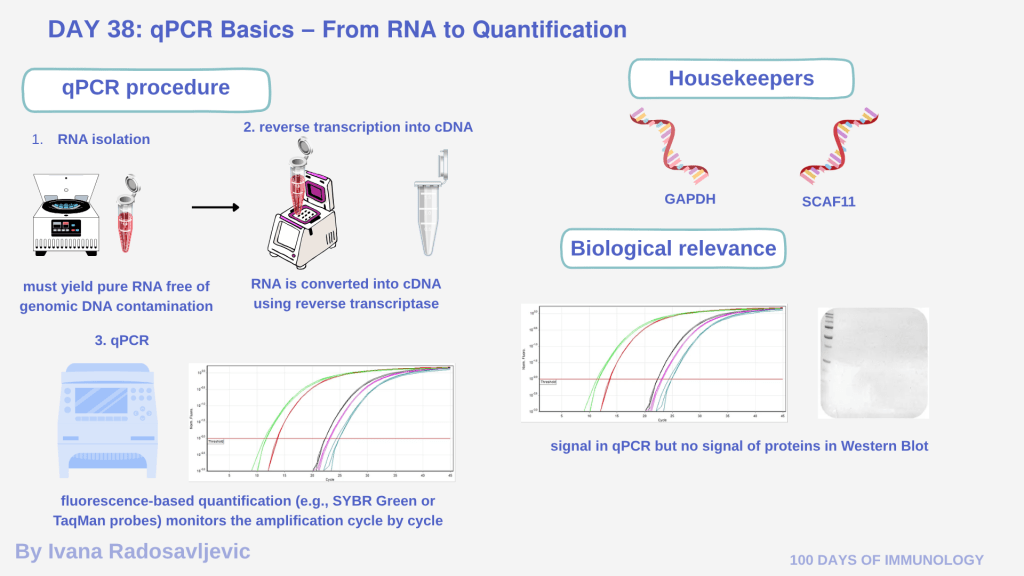
𝘕𝘰𝘳𝘮𝘢𝘭𝘪𝘻𝘢𝘵𝘪𝘰𝘯 is a critical aspect of qPCR interpretation. Reference or 𝘩𝘰𝘶𝘴𝘦𝘬𝘦𝘦𝘱𝘪𝘯𝘨 𝘨𝘦𝘯𝘦𝘴, such as 𝘎𝘈𝘗𝘋𝘏 or 𝘚𝘊𝘈𝘍11, are consistently expressed across samples and experimental conditions, providing a baseline to account for variations in RNA quantity [2].
𝗙𝗿𝗼𝗺 𝗥𝗡𝗔 𝗜𝘀𝗼𝗹𝗮𝘁𝗶𝗼𝗻 𝘁𝗼 𝗔𝗺𝗽𝗹𝗶𝗳𝗶𝗰𝗮𝘁𝗶𝗼𝗻
The workflow begins with 𝘙𝘕𝘈 𝘪𝘴𝘰𝘭𝘢𝘵𝘪𝘰𝘯, must yield pure RNA free of genomic DNA contamination. The next step is 𝘳𝘦𝘷𝘦𝘳𝘴𝘦 𝘵𝘳𝘢𝘯𝘴𝘤𝘳𝘪𝘱𝘵𝘪𝘰𝘯, where RNA is converted into cDNA using reverse trans riptase. Depending on the yield, cDNA may be diluted (commonly 1:2 to 1:100) to achieve optimal amplification. One can also send cDNA for sequencing prior to qPCR to confirm the identity of the target gene.
In the 𝘲𝘗𝘊𝘙 𝘴𝘵𝘦𝘱, fluorescence-based quantification (e.g., SYBR Green or TaqMan probes) monitors the amplification cycle by cycle. Each cycle’s signal intensity correlates with the starting quantity of the target sequence, enabling precise quantification [3]. Essential controls include a 𝘯𝘰-𝘵𝘦𝘮𝘱𝘭𝘢𝘵𝘦 𝘤𝘰𝘯𝘵𝘳𝘰𝘭 (𝘕𝘛𝘊), a 𝘯𝘰-𝘳𝘦𝘷𝘦𝘳𝘴𝘦-𝘵𝘳𝘢𝘯𝘴𝘤𝘳𝘪𝘱𝘵𝘪𝘰𝘯 𝘤𝘰𝘯𝘵𝘳𝘰𝘭 (𝘕𝘰-𝘙𝘛), and 𝘱𝘰𝘴𝘪𝘵𝘪𝘷𝘦 𝘤𝘰𝘯𝘵𝘳𝘰𝘭𝘴 to confirm amplification efficiency and specificity.
𝗜𝗻𝘁𝗲𝗿𝗽𝗿𝗲𝘁𝗶𝗻𝗴 𝘁𝗵𝗲 𝗕𝗶𝗼𝗹𝗼𝗴𝗶𝗰𝗮𝗹 𝗥𝗲𝗹𝗲𝘃𝗮𝗻𝗰𝗲
From my lab experience, it is not uncommon to observe cases where a gene is detectable at the mRNA level via qPCR, yet the corresponding protein remains undetectable by Western blot. Such discrepancies can arise from low protein abundance below the detection limit, post-transcriptional regulation, or rapid protein degradation [4].
𝗤𝘂𝗲𝘀𝘁𝗶𝗼𝗻 𝗳𝗼𝗿 𝘁𝗵𝗲 𝗮𝘂𝗱𝗶𝗲𝗻𝗰𝗲: Have you ever faced inconsistent results between your qPCR and protein assays?
Stay tuned for 𝗗𝗮𝘆 𝟯𝟵: 𝗘𝗟𝗜𝗦𝗽𝗼𝘁 𝗕𝗮𝘀𝗶𝗰𝘀 – 𝗗𝗲𝘁𝗲𝗰𝘁𝗶𝗻𝗴 𝗖𝘆𝘁𝗼𝗸𝗶𝗻𝗲-𝗦𝗲𝗰𝗿𝗲𝘁𝗶𝗻𝗴 𝗖𝗲𝗹𝗹𝘀 𝘄𝗶𝘁𝗵 𝗣𝗿𝗲𝗰𝗶𝘀𝗶𝗼𝗻
𝗥𝗲𝗳𝗲𝗿𝗲𝗻𝗰𝗲𝘀:
1. DOI: 10.1038/nprot.2006.236
2. DOI: 10.1038/sj.gene.6364190
3. DOI: 10.1101/gr.6.10.986
4. DOI: 10.1038/nrg3185
#100DaysofImmunology #qPCR #GeneExpression #MolecularBiology #Immunology #RTqPCR #LabTips #ScientificResearch #Biotech #CellBiology
 Ivana Radosavljević | Immunotherapy Scientist | Living and Breathing Immunology