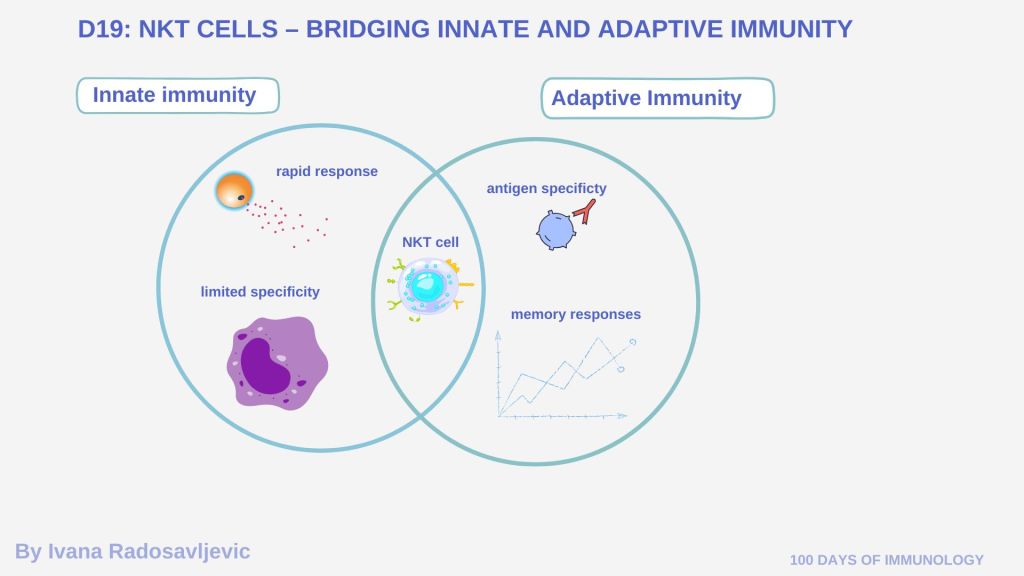
Natural Killer T (NKT) cells are a unique subset of T lymphocytes that function at the interface of the innate and adaptive immune systems. They express a semi-invariant T-cell receptor (TCR) and recognize lipid antigens presented by the CD1d molecule. They respond rapidly to stimuli and produce a broad array of cytokines, influencing immune responses against infections, tumors, and autoimmune diseases [1].
𝗕𝗿𝗶𝗱𝗴𝗶𝗻𝗴 𝗜𝗻𝗻𝗮𝘁𝗲 𝗮𝗻𝗱 𝗔𝗱𝗮𝗽𝘁𝗶𝘃𝗲 𝗜𝗺𝗺𝘂𝗻𝗶𝘁𝘆
Like innate immune cells, they can 𝘳𝘦𝘤𝘰𝘨𝘯𝘪𝘻𝘦 𝘢𝘯𝘥 𝘳𝘦𝘴𝘱𝘰𝘯𝘥 𝘵𝘰 𝘱𝘢𝘵𝘩𝘰𝘨𝘦𝘯𝘴 𝘪𝘯 𝘢 𝘯𝘰𝘯-𝘴𝘱𝘦𝘤𝘪𝘧𝘪𝘤 𝘮𝘢𝘯𝘯𝘦𝘳, leading to rapid cytokine production. However, their 𝘢𝘯𝘵𝘪𝘨𝘦𝘯 𝘴𝘱𝘦𝘤𝘪𝘧𝘪𝘤𝘪𝘵𝘺 𝘢𝘯𝘥 𝘮𝘦𝘮𝘰𝘳𝘺 𝘤𝘢𝘱𝘢𝘣𝘪𝘭𝘪𝘵𝘪𝘦𝘴 align them with adaptive immunity. This dual functionality allows NKT cells to enhance the body’s ability to respond to diverse challenges [1,2,3].
𝗚𝗲𝗿𝗺𝗮𝗻 𝗥𝗲𝘀𝗲𝗮𝗿𝗰𝗵𝗲𝗿𝘀 𝗜𝗻𝘃𝗲𝘀𝘁𝗶𝗴𝗮𝘁𝗶𝗻𝗴 𝗡𝗞𝗧 𝗖𝗲𝗹𝗹𝘀
Prof. Dr. Hermann Wagner (Technical University of Munich) has explored NKT cell roles in immune responses, and their interactions with other immune cells and potential therapeutic applications [4].
Prof. Dr. Andrea Ablasser (formerly University of Bonn) has provided insights into innate immune recognition mechanisms that inform studies on NKT cell activation [4].
Prof. Dr. Philip Rosenstiel (Kiel University) investigates molecular pathways in chronic inflammatory diseases, shedding light on NKT cell contributions to such conditions [4].
𝗦𝗽𝗲𝗰𝘂𝗹𝗮𝘁𝗶𝘃𝗲 𝗛𝘆𝗽𝗼𝘁𝗵𝗲𝘀𝗶𝘀: 𝗡𝗞𝗧 𝗖𝗲𝗹𝗹𝘀 𝗮𝘀 𝗜𝗺𝗺𝘂𝗻𝗲 𝗜𝗻𝘁𝗲𝗴𝗿𝗮𝘁𝗼𝗿𝘀
NKT could 𝘤𝘰𝘰𝘳𝘥𝘪𝘯𝘢𝘵𝘦 𝘵𝘩𝘦 𝘵𝘪𝘮𝘪𝘯𝘨 𝘢𝘯𝘥 𝘮𝘢𝘨𝘯𝘪𝘵𝘶𝘥𝘦 𝘰𝘧 𝘪𝘮𝘮𝘶𝘯𝘦 𝘳𝘦𝘴𝘱𝘰𝘯𝘴𝘦𝘴 by integrating signals from both innate and adaptive pathways. This role may be particularly crucial in maintaining immune homeostasis and 𝘱𝘳𝘦𝘷𝘦𝘯𝘵𝘪𝘯𝘨 𝘰𝘷𝘦𝘳𝘢𝘤𝘵𝘪𝘷𝘦 𝘪𝘮𝘮𝘶𝘯𝘦 𝘳𝘦𝘴𝘱𝘰𝘯𝘴𝘦𝘴 that could lead to autoimmunity [1,3,4].
Stay tuned for 𝗗𝗮𝘆 𝟮𝟬: 𝗜𝗟𝗖𝘀 – 𝗘𝗺𝗲𝗿𝗴𝗶𝗻𝗴 𝗥𝗼𝗹𝗲𝘀 𝗶𝗻 𝗜𝗺𝗺𝘂𝗻𝗶𝘁𝘆
𝗥𝗲𝗳𝗲𝗿𝗲𝗻𝗰𝗲𝘀
1. DOI: 10.1038/ni1203-1164
2. DOI: 10.1038/sj.cdd.4402170
3. doi: 10.1126/science.1083317
4. doi: 10.3389/fimmu.2021.786190
#100DaysOfImmunology #NKTCells #InnateImmunity #AdaptiveImmunity #ImmuneSystem #ImmunologyResearch #GermanImmunologists #Immunotherapy #TCells #CD1d #Cytokines #Autoimmunity #CancerImmunology #ChronicInflammation
 Ivana Radosavljević | Immunotherapy Scientist | Living and Breathing Immunology