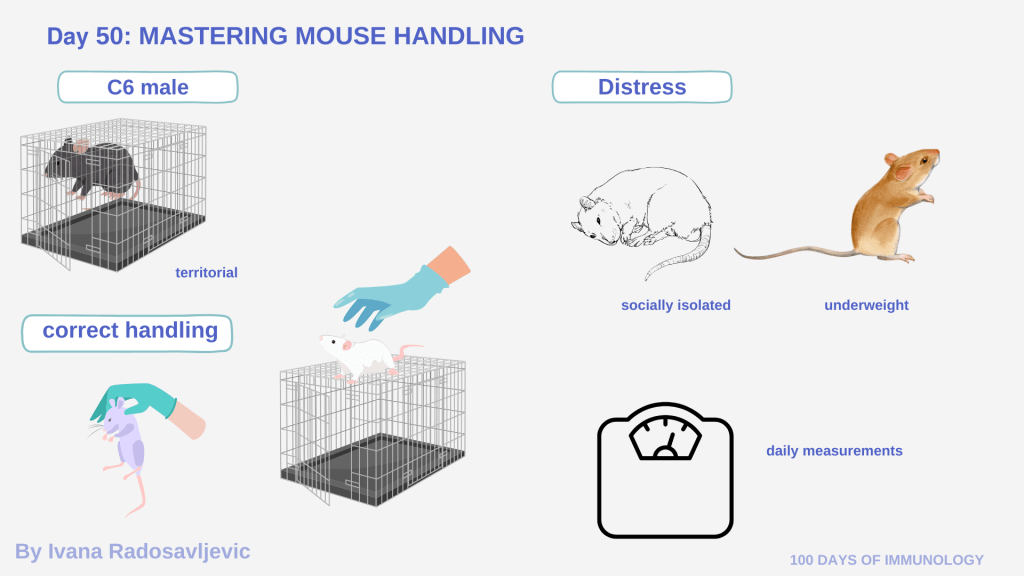
Handling laboratory mice safely and effectively is crucial for both animal welfare and experimental integrity. Male mice are generally more aggressive than females and should 𝘯𝘦𝘷𝘦𝘳 be housed together, although strain differences exist—C57BL/6 males are particularly territorial. Mice must be kept on a 12-hour light-dark cycle, with ad libitum access to food and water, and monitored even on weekends for signs of disease or distress [1,2].
𝗥𝗲𝘀𝘁𝗿𝗮𝗶𝗻𝘁 𝘁𝗲𝗰𝗵𝗻𝗶𝗾𝘂𝗲𝘀:
• Grab the mouse by the loose skin at the back of the neck (´scruff´) from behind, keeping its head away from your fingers to avoid bites.
• Place the mouse gently on top of a metal cage for added grip, using its natural behavior of holding bars with front and hind limbs.
• Remain calm and avoid showing fear; mice can sense anxiety, which may make them more resistant or aggressive [3].
𝗦𝗶𝗴𝗻𝘀 𝗼𝗳 𝗱𝗶𝘀𝗲𝗮𝘀𝗲 𝗼𝗿 𝗱𝗶𝘀𝘁𝗿𝗲𝘀𝘀 𝘁𝗼 𝗺𝗼𝗻𝗶𝘁𝗼𝗿:
𝘉𝘦𝘩𝘢𝘷𝘪𝘰𝘳𝘢𝘭: lethargy, uncoordinated ´drunken´ gait, tremors, hunched posture, labored breathing, reluctance to move, excessive grooming or self-injury.
𝘗𝘩𝘺𝘴𝘪𝘤𝘢𝘭: weight loss, swelling or tumors, diarrhea, discharge from eyes/nose, dehydration, or dull and patchy coat.
𝘚𝘰𝘤𝘪𝘢𝘭: abnormal aggression or isolation [2].
𝗛𝘂𝗺𝗮𝗻𝗲 𝗲𝘂𝘁𝗵𝗮𝗻𝗮𝘀𝗶𝗮: Isoflurane anesthesia is used to induce unconsciousness, followed by cervical dislocation. To confirm mouse is dead, pinch toe. Absence of reflexes, confirms euthanasia [1].
By mastering handling and monitoring techniques, we ensure both reliable experimental data and ethical care.
𝗤𝘂𝗲𝘀𝘁𝗶𝗼𝗻: What additional behavioral signs do you monitor in your mouse models to catch early distress?
Stay tuned for 𝗗𝗮𝘆 𝟱𝟭: 𝗜𝗻𝘁𝗿𝗼𝗱𝘂𝗰𝘁𝗶𝗼𝗻 𝘁𝗼 𝗖𝗮𝗻𝗰𝗲𝗿 𝗜𝗺𝗺𝘂𝗻𝗼𝗹𝗼𝗴𝘆
𝗥𝗲𝗳𝗲𝗿𝗲𝗻𝗰𝗲𝘀:
1. National Research Council. Guide for the Care and Use of Laboratory Animals, 8th edition. 2011.
2. Silver LM. Mouse Genetics: Concepts and Applications. Oxford University Press, 1995.
3. Hurst JL, West RS. Taming anxiety in laboratory mice. Nat Methods 2010;7:825–826.
#100DaysofImmunology #MouseHandling #LaboratoryAnimals #AnimalWelfare #ImmunologyResearch #MouseModels #LabTips
 Ivana Radosavljević | Immunotherapy Scientist | Living and Breathing Immunology