Immunity – we think of uniform system composed of many cell types. In reality, our immune system is divided into two sides of a coin: the innate and the adaptive. Understanding their differences is essential for understanding the mechanistic immunology.
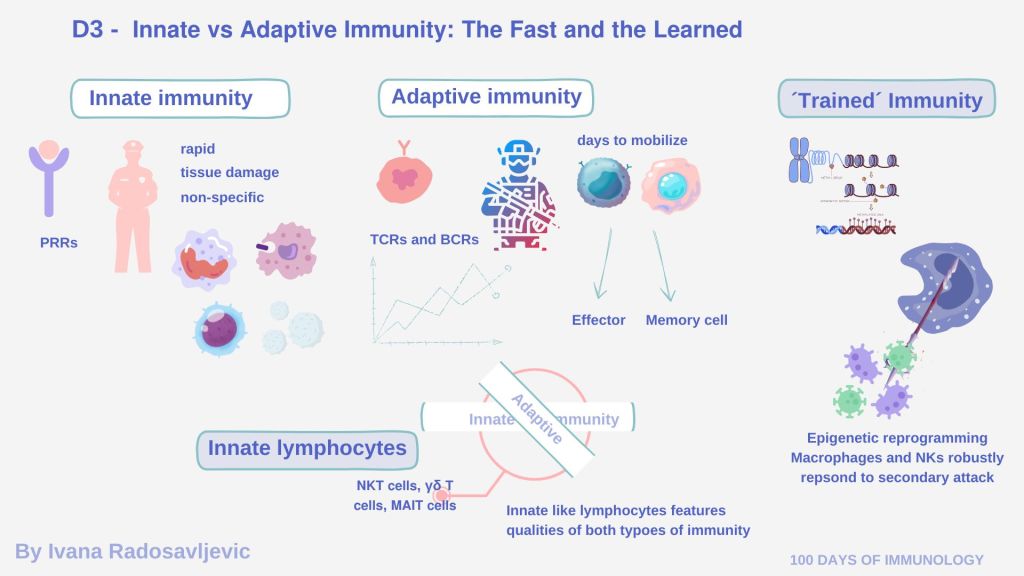
𝗜𝗻𝗻𝗮𝘁𝗲 𝗶𝗺𝗺𝘂𝗻𝗶𝘁𝘆: the body’s 𝘳𝘢𝘱𝘪𝘥-𝘳𝘦𝘴𝘱𝘰𝘯𝘴𝘦 team
- Acts within hours
- Relies on germline encoded receptors (𝘱𝘢𝘵𝘵𝘦𝘳𝘯 𝘳𝘦𝘤𝘰𝘨𝘯𝘪𝘵𝘪𝘰𝘯 𝘳𝘦𝘤𝘦𝘱𝘵𝘰𝘳𝘴 𝘗𝘙𝘙s) to detect pathogens or tissue damage [1].
- Cells involved: neutrophils, macrophages, DC, NK cells, and innate lymphoid cells (ILCs)
- Fast, consistent, and non-specific, considered ´memory-less´ [2].
𝗔𝗱𝗮𝗽𝘁𝗶𝘃𝗲 𝗶𝗺𝗺𝘂𝗻𝗶𝘁𝘆: the specialized memory force
- Takes days to mobilize, but brings precision and memory
- Relies on 𝘴𝘰𝘮𝘢𝘵𝘪𝘤𝘢𝘭𝘭𝘺 𝘳𝘦𝘢𝘳𝘳𝘢𝘯𝘨𝘦𝘥 𝘳𝘦𝘤𝘦𝘱𝘵𝘰𝘳𝘴 (TCRs and BCRs) to recognize specific antigens [1].
- Cells involved: B and T lymphocytes, which differentiate into effectors and long-lived memory cells
- Remembers past encounters, mounting faster and stronger responses upon re-exposure [2].
𝗠𝗲𝘁𝗮𝗽𝗵𝗼𝗿 𝘁𝗼 𝗿𝗲𝗺𝗲𝗺𝗯𝗲𝗿 𝗶𝘁 𝗯𝘆:
Innate immunity is like prison guards — always on, reacting immediately, preventing prisoners from escape.
Adaptive immunity is like special forces — slower to act, but trained and remembered for life.
𝗕𝗹𝘂𝗿𝗿𝗶𝗻𝗴 𝘁𝗵𝗲 𝗯𝗼𝘂𝗻𝗱𝗮𝗿𝗶𝗲𝘀
Recent research shows the line between innate and adaptive immunity isn’t absolute:
- Innate-like lymphocytes (𝗡𝗞𝗧 𝗰𝗲𝗹𝗹𝘀, γδ 𝗧 𝗰𝗲𝗹𝗹𝘀, 𝗠𝗔𝗜𝗧 𝗰𝗲𝗹𝗹𝘀) exhibit features of both types
- 𝘛𝘳𝘢𝘪𝘯𝘦𝘥 𝘪𝘮𝘮𝘶𝘯𝘪𝘵𝘺, as described by Netea and colleagues, demonstrates that innate cells can acquire memory-like properties 𝘷𝘪𝘢 𝘦𝘱𝘪𝘨𝘦𝘯𝘦𝘵𝘪𝘤 𝘳𝘦𝘱𝘳𝘰𝘨𝘳𝘢𝘮𝘮𝘪𝘯𝘨, 𝘢𝘭𝘭𝘰𝘸𝘪𝘯𝘨 𝘮𝘢𝘤𝘳𝘰𝘱𝘩𝘢𝘨𝘦𝘴 𝘰𝘳 𝘕𝘒 𝘤𝘦𝘭𝘭𝘴 𝘵𝘰 𝘳𝘦𝘴𝘱𝘰𝘯𝘥 𝘳𝘰𝘣𝘶𝘴𝘵𝘭𝘺 𝘵𝘰 𝘴𝘦𝘤𝘰𝘯𝘥𝘢𝘳𝘺 𝘪𝘯𝘴𝘶𝘭𝘵𝘴 [3].
𝗥𝗲𝗮𝗹-𝗹𝗶𝗳𝗲 𝗶𝗹𝗹𝘂𝘀𝘁𝗿𝗮𝘁𝗶𝗼𝗻
I scraped my knee: Neutrophils arrive to site within hours (innate), clearing pathogens. Days later, T and B cells arrive (adaptive), generating long-term memory. In some individuals, innate mechanisms may be ´trained´ by previous exposures [3].
𝗧𝗮𝗸𝗲𝗮𝘄𝗮𝘆
Innate immunity is fast but forgetful. Adaptive immunity is slow but unforgettable. T𝘩𝘪𝘴 𝘴𝘺𝘴𝘵𝘦𝘮 𝘪𝘴 𝘮𝘰𝘳𝘦 𝘧𝘭𝘦𝘹𝘪𝘣𝘭𝘦 𝘢𝘯𝘥 𝘪𝘯𝘵𝘦𝘳𝘤𝘰𝘯𝘯𝘦𝘤𝘵𝘦𝘥 𝘵𝘩𝘢𝘯 𝘵𝘦𝘹𝘵𝘣𝘰𝘰𝘬𝘴 𝘰𝘧𝘵𝘦𝘯 𝘴𝘶𝘨𝘨𝘦𝘴𝘵 [1–3].
Stay tuned for 𝗗𝗮𝘆 𝟰: 𝗛𝗲𝗺𝗮𝘁𝗼𝗽𝗼𝗶𝗲𝘀𝗶𝘀 – 𝘄𝗵𝗲𝗿𝗲 𝗶𝗺𝗺𝘂𝗻𝗲 𝗰𝗲𝗹𝗹𝘀 𝗰𝗼𝗺𝗲 𝗳𝗿𝗼𝗺
References
1. Janeway’s Immunobiology
2. DOI: 10.1038/nri.2015.3
3. DOI: 10.1126/science.aaf1098
#100DaysOfImmunology #Immunology #MechanisticBiology #TrainedImmunity #InnateImmunity #AdaptiveImmunity #ScienceCommunication #TeachingImmunology
 Ivana Radosavljević | Immunotherapy Scientist | Living and Breathing Immunology