Contamination is one of the most common issues in any cell culture laboratory.
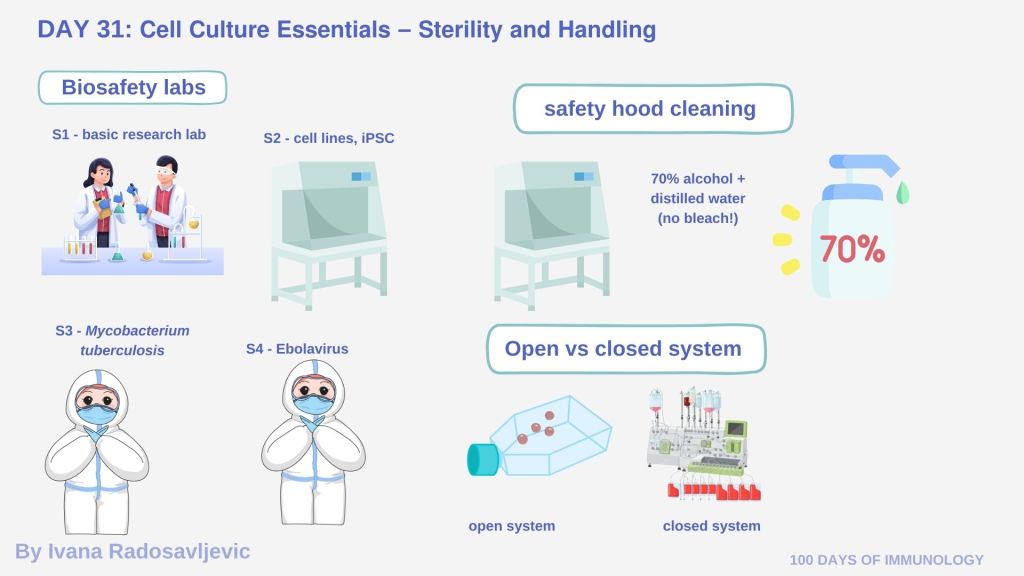
𝗕𝗶𝗼𝘀𝗮𝗳𝗲𝘁𝘆 𝗟𝗲𝘃𝗲𝗹𝘀 – 𝗦𝟭 𝘁𝗼 𝗦𝟰
𝘚1: Basic research labs with no known risks.
𝘚2:Standard for human cell culture (cell lines, iPSC, primary cells). Requires access restrictions, biosafety cabinets, gloves, and lab coats.
𝘚3: Work with pathogens such as Mycobacterium tuberculosis.
𝘚4: Highest level, for lethal agents like Ebola [1].
For immunology and stem cell work, 𝘚2 𝘪𝘴 𝘵𝘩𝘦 𝘮𝘪𝘯𝘪𝘮𝘶𝘮. 𝘞𝘦𝘢𝘳𝘪𝘯𝘨 𝘢 𝘭𝘢𝘣 𝘤𝘰𝘢𝘵 𝘢𝘯𝘥 𝘨𝘭𝘰𝘷𝘦𝘴 𝘶𝘯𝘥𝘦𝘳 𝘵𝘩𝘦 𝘴𝘢𝘧𝘦𝘵𝘺 𝘩𝘰𝘰𝘥 𝘪𝘴 𝘯𝘰𝘯-𝘯𝘦𝘨𝘰𝘵𝘪𝘢𝘣𝘭𝘦.
𝗧𝗵𝗲 𝗦𝗮𝗳𝗲𝘁𝘆 𝗛𝗼𝗼𝗱 𝗮𝗻𝗱 𝗖𝗹𝗲𝗮𝗻𝗶𝗻𝗴
Biosafety cabinets protect samples and users by maintaining laminar airflow.
𝘊𝘭𝘦𝘢𝘯𝘪𝘯𝘨: Always disinfect with 70% isopropanol before and after use.
𝘞𝘩𝘺 𝘯𝘰𝘵 𝘣𝘭𝘦𝘢𝘤𝘩? Academic hospitals forbid it due to corrosiveness and toxic fumes, even when handling viral vectors (AAV, AdV, Lentivirus). Instead, alcohol-based wipes, sporocidal products, or Optisept are recommended [2].
𝗜𝗻𝗱𝘂𝘀𝘁𝗿𝘆 𝗻𝗼𝘁𝗲: GMP labs follow stricter validated disinfection regimes.
𝗢𝗽𝗲𝗻 𝘃𝘀. 𝗖𝗹𝗼𝘀𝗲𝗱 𝗦𝘆𝘀𝘁𝗲𝗺𝘀
𝘖𝘱𝘦𝘯 𝘴𝘺𝘴𝘵𝘦𝘮𝘴: Flasks, well plates, dishes – vulnerable to user error and contamination.
𝘊𝘭𝘰𝘴𝘦𝘥 𝘴𝘺𝘴𝘵𝘦𝘮𝘴: Automated or sealed bioreactors, reducing human contact. Used in GMP settings, e.g. CAR-T manufacturing [3].
𝗖𝗲𝗹𝗹 𝗖𝘂𝗹𝘁𝘂𝗿𝗲 𝘃𝘀. 𝗠𝗶𝗰𝗿𝗼𝗯𝗶𝗼𝗹𝗼𝗴𝘆
In microbiology, sterility has a different meaning: 𝘢𝘨𝘢𝘳 𝘱𝘭𝘢𝘵𝘦𝘴 𝘢𝘳𝘦 𝘦𝘹𝘱𝘰𝘴𝘦𝘥 𝘵𝘰 𝘨𝘳𝘰𝘸 𝘤𝘰𝘭𝘰𝘯𝘪𝘦𝘴. In mammalian cell culture, 𝘢𝘣𝘴𝘰𝘭𝘶𝘵𝘦 𝘴𝘵𝘦𝘳𝘪𝘭𝘪𝘵𝘺 𝘪𝘴 𝘤𝘳𝘪𝘵𝘪𝘤𝘢𝘭 — bacteria, fungi, or endotoxin will all confound experimental results [4].
𝗔𝗻𝗲𝗰𝗱𝗼𝘁𝗲 𝗳𝗿𝗼𝗺 𝘁𝗵𝗲 𝗟𝗮𝗯
Academic lab: I used sterile 18-gauge cannula to apply Dermabond glue to transwell filters in a 24-well plate for a mucus secretion assay. I accidentally poked through my glove and into my finger. Panicked, I ran out of the lab. Our First Aid Officer reassured me: since it was a sterile needle, there was no need to visit the Betriebsarzt.
𝗤𝘂𝗲𝘀𝘁𝗶𝗼𝗻: What was your most memorable lab safety lesson – the one you never forgot?
Stay tuned for 𝗗𝗮𝘆 𝟯𝟮: 𝗣𝗿𝗲𝘃𝗲𝗻𝘁𝗶𝗻𝗴 𝗖𝗼𝗻𝘁𝗮𝗺𝗶𝗻𝗮𝘁𝗶𝗼𝗻 𝗶𝗻 𝗖𝗲𝗹𝗹 𝗖𝘂𝗹𝘁𝘂𝗿𝗲
𝗥𝗲𝗳𝗲𝗿𝗲𝗻𝗰𝗲𝘀
1. https://www.baua.de/EN/Topics/Chemicals-biological-agents/Biological-agents-infection-control/Biological-agents/Classification
2. https://iris.who.int/server/api/core/bitstreams/41034b03-94b4-4fd6-9c6b-7662117127ac/content
3. DOI: 10.1038/nbt.3525
4. DOI:10.1002/9780470649367
#100DaysOfImmunology #CellCulture #Sterility #Biosafety #LabSafety #ContaminationPrevention #iPSC #ImmunologyResearch #LaboratoryPractice
 Ivana Radosavljević | Immunotherapy Scientist | Living and Breathing Immunology