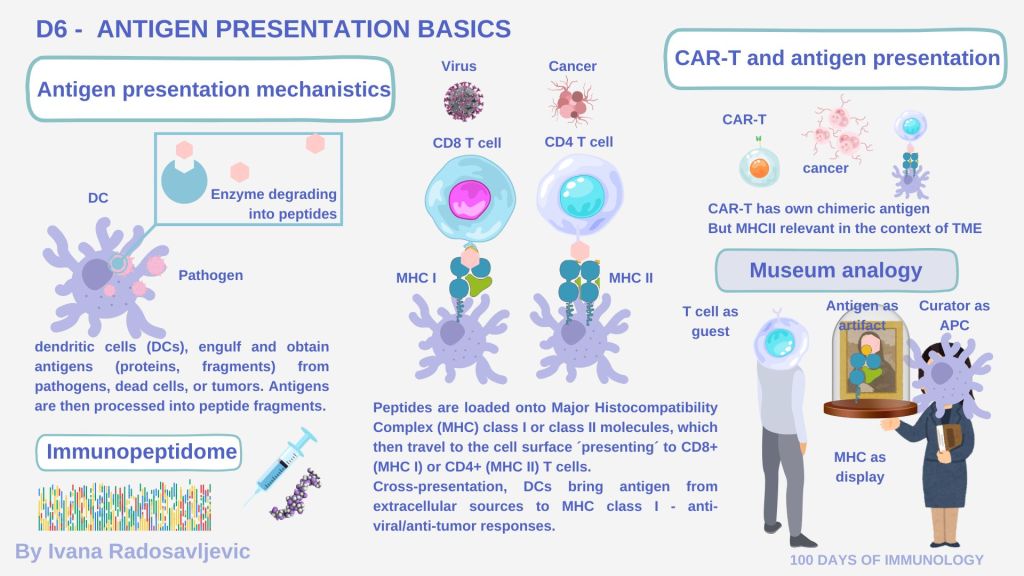
𝗪𝗵𝗮𝘁 𝗶𝘀 𝗔𝗻𝘁𝗶𝗴𝗲𝗻 𝗣𝗿𝗲𝘀𝗲𝗻𝘁𝗮𝘁𝗶𝗼𝗻 & 𝗛𝗼𝘄 𝗜𝘁 𝗪𝗼𝗿𝗸𝘀
Antigen-presenting cells (APCs) such as dendritic cells (DCs), macrophages, and B cells engulf and obtain antigens (proteins, fragments) from pathogens, dead cells, or tumors. Antigens are then processed into peptide fragments. Peptides are loaded onto Major Histocompatibility Complex (MHC) class I or class II molecules, which then travel to the cell surface ´presenting´ to CD8+ (MHC I) or CD4+ (MHC II) T cells [1].
Cross-presentation, DCs birng antigen from extraacellular sources to MHC class I – anti viral/anti-tumor responses [2].
𝗔𝗻𝗮𝗹𝗼𝗴𝘆
Think of antigen presentation like 𝘢 𝘮𝘶𝘴𝘦𝘶𝘮 𝘥𝘪𝘴𝘱𝘭𝘢𝘺:
The APC = curator
The antigen (peptide) = artifact fragment
The MHC molecule = the display case
The T cell = museum visitor whose recognition (and reaction) depends on how well the fragment fits in the display case and how it’s labeled
If the artifact is shiny (high affinity), presented clearly → the visitor notices; if it’s hidden, the visitor may miss it.
𝗚𝗲𝗿𝗺𝗮𝗻 𝗥𝗲𝘀𝗲𝗮𝗿𝗰𝗵𝗲𝗿𝘀 & 𝗖𝗼𝗻𝘁𝗿𝗶𝗯𝘂𝘁𝗶𝗼𝗻𝘀
Christian Kurts (University of Bonn) has done crucial work on cross-presentation, especially in self-antigen presentation and tolerance: e.g., how DCs present self-antigens via MHC I in non-infectious contexts, and how this shapes immune tolerance and autoimmunity. [3]
Hans-Georg Rammensee (Tübingen) has contributed to MHC biology including rules deciding which peptides are presented, immunopeptidome studies, and applications in cancer immunotherapy. [4]
𝗖𝗹𝗶𝗻𝗶𝗰𝗮𝗹 𝗥𝗲𝗹𝗲𝘃𝗮𝗻𝗰𝗲: 𝗔𝗻𝘁𝗶𝗴𝗲𝗻 𝗣𝗿𝗲𝘀𝗲𝗻𝘁𝗮𝘁𝗶𝗼𝗻 𝗮𝗻𝗱 𝗖𝗔𝗥-𝗧 / 𝗜𝗺𝗺𝘂𝗻𝗼𝘁𝗵𝗲𝗿𝗮𝗽𝘆
Although the CAR-T cells do not rely directly on classical antigen presentation for their target antigen (they have their own chimeric receptor), the antigen presentation machinery of the tumor and surrounding host cells is still critical: to prime helper CD4+ T cells, to regulate anti-tumor immunity, and for epitope spreading.
𝗢𝗽𝗲𝗻 𝗤𝘂𝗲𝘀𝘁𝗶𝗼𝗻
If different people have variation in how efficiently APCs edit and load peptides (due to genetic, epigenetic, or environmental differences), could we one day predict someone’s antigen presentation ´signature´ and tailor vaccines [5] or immunotherapies accordingly?
Stay tuned for 𝗗𝗮𝘆 𝟳: 𝗜𝗺𝗺𝘂𝗻𝗼𝗹𝗼𝗴𝗶𝗰𝗮𝗹 𝗺𝗲𝗺𝗼𝗿𝘆 𝗮𝗻𝗱 𝗶𝗺𝗺𝘂𝗻𝗲 𝘀𝘆𝗻𝗮𝗽𝘀𝗲
𝗥𝗲𝗳𝗲𝗿𝗲𝗻𝗰𝗲𝘀
1. DOI: 10.1038/nri3084
2. DOI: 10.3389/fimmu.2018.01643
3. doi.org/10.1038/nri2780
4. DOI: 10.1038/s41467-023-42692-7
5. doi/10.1128/msphere.00502-24
#100DaysOfImmunology #AntigenPresentation #MHC #CrossPresentation #Immunotherapy #CART #MechanisticBiology #ScienceEducation #Research #Immunopeptidome #Tolerance #Autoimmunity
 Ivana Radosavljević | Immunotherapy Scientist | Living and Breathing Immunology